


Brain Reset: How 80 Hz Vibration Therapy Triggers Natural Dopamine and Eases Anxiety
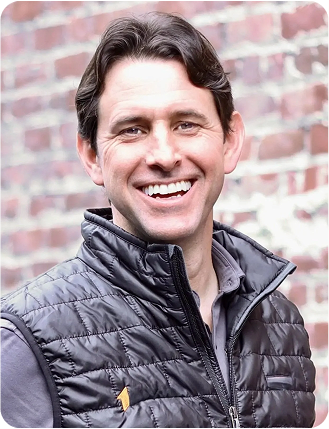
Thomas Wilkinson lost his older brother to a methadone overdose. Growing up, their childhood was difficult, and each of them found a different way to cope. His brother turned to substances. Thomas carried anxiety. After a church mission in Brazil, the pain became unbearable, and his psychologist referred him to a psychiatrist who prescribed four medications: Adderall, Citalopram, Gabapentin, and Klonopin. They helped, but the side effects were severe, and when Thomas tried to stop taking them, he couldn't. He tried a dozen times. He couldn't get out of bed. That's when he realized he wasn't dealing with a discipline problem. He was chemically dependent.

About This Blog
Thomas Wilkinson lost his older brother to a methadone overdose. Growing up, their childhood was difficult, and each of them found a different way to cope. His brother turned to substances. Thomas carried anxiety. After a church mission in Brazil, the pain became unbearable, and his psychologist referred him to a psychiatrist who prescribed four medications: Adderall, Citalopram, Gabapentin, and Klonopin. They helped, but the side effects were severe, and when Thomas tried to stop taking them, he couldn't. He tried a dozen times. He couldn't get out of bed. That's when he realized he wasn't dealing with a discipline problem. He was chemically dependent.
In this episode of Fountain of Vitality, host LaMont Leavitt sits down with Thomas Wilkinson, CEO of NeuroNova, to explore how targeted vibration at 80 Hz triggers a physiological release of dopamine and what that means for anxiety, insomnia, deep sleep, and long-term brain health.
A Decade of Dead Ends
The research behind NeuroNovaCo began roughly ten years ago at Brigham Young University in Provo, Utah. A team of researchers set out to find a non-invasive, non-pharmacological alternative to methadone. The goal was simple: help the brain produce dopamine naturally so patients recovering from addiction wouldn't need to trade one substance dependency for another.
Thousands of experiments produced nothing. Seven to eight years in, the team had exhausted every conventional approach. Then one of the researchers, a former chiropractor who had worked with VA patients in San Francisco, recalled something from his earlier career. When he gave chiropractic adjustments to patients coming off opiates, they reported feeling relief from withdrawal symptoms and anxiety. That memory led him to suggest trying vibration on the lab rats. The rest of the team thought it was a long shot, but they had run out of alternatives.
The 80 Hz Guess
They guessed 80 Hertz as the first frequency to try. The rats showed 200% of baseline dopamine, a level that peaked over about three hours and then gradually returned to normal. Subsequent experiments at other frequencies produced nothing. Thomas compares the moment to the discovery of penicillin: a breakthrough born not from calculation but from a fortunate guess at exactly the right time.
The team published their first paper in 2019, and the National Institutes of Health awarded them a grant for a human trial. That trial, conducted in Utah, showed a 60% decrease in generalized anxiety versus placebo in patients coming off opiates. The results led to a second NIH grant of $3.5 million, and NeuroNovaCo is currently in a multi-state trial working toward FDA clearance.
Why a Chair
Delivering 80 Hz vibration to the mechanoreceptors deep in the spine turned out to be an engineering challenge. The solution involved creating what's called a heterodyne wave, which combines two waveforms to produce a third embedded wave at the target frequency. The most effective delivery method was a chair that positions the user with upright posture so the wave travels through the full length of the spine.
The chair is currently sold as a wellness product while the FDA process continues. Thomas notes that the team is also working on design improvements because demand for an in-home version has outpaced their expectations. Families, clinics, and even a children's hospital in St. George, Utah, are already using it. The adolescent patients there call it "the chill chair," and one young patient said it probably saved his life.
Deep Sleep and Longevity
Thomas uses the chair twice daily, morning and evening. He tracks his sleep with an Oura Ring and says his time to fall asleep dropped from an hour and a half to under 17 minutes. At a conference in Arizona, a world-renowned sleep researcher asked to review Thomas's Oura Ring data. After scrolling through the numbers, the researcher told him he had never seen anyone achieve that much deep sleep in all his years of practice.
Deep sleep is the phase where the brain clears itself of toxins and renews itself. Without adequate deep sleep, cognitive decline becomes more likely over time. Thomas connects this directly to longevity, noting that screen time and the constant stimulation of notifications, emails, and social media have thrown dopamine levels out of balance for millions of people. That imbalance creates a persistent sense of unease that disrupts sleep quality at its deepest levels.
Accessibility and Cost
The chair retails at just under $6,000 for an outright purchase. NeuroNovaCo also offers a lease-to-own option starting at $199 per month. Thomas points to the Johansson family in Gilbert, Arizona, as an example of the value: the father is a dentist dealing with anxiety, the son and daughter both experience anxiety, and the mother carries the stress of managing all of it. One chair in the home serves the entire family.
A Shift, Not a Fight
Thomas is careful not to position NeuroNovaCo against pharmaceuticals. He acknowledges the cures and benefits that come with them. His argument is more measured: the pendulum swung too far in one direction, and the tools now available, including non-invasive options like targeted vibration, deserve a place alongside traditional treatments. The goal is to address root causes rather than manage symptoms indefinitely.
Key Takeaways:
Researchers at BYU spent nearly a decade searching for a non-drug way to trigger dopamine before discovering that 80 Hz vibration produced 200% of baseline dopamine in rats
The frequency was a guess; other frequencies produced no results
A NIH-funded human trial showed a 60% reduction in generalized anxiety versus placebo
NeuroNovaCo is currently in a multi-state FDA trial with a $3.5 million grant
The chair uses a heterodyne wave to deliver 80 Hz vibration through spinal mechanoreceptors
Thomas personally used the chair to wean off four prescribed anxiety medications after a dozen failed attempts
Deep sleep, the phase where the brain clears toxins, improved dramatically with daily use
The chair is available as a wellness product starting at $199/month through a lease-to-own model
A children's hospital in St. George, Utah, uses the chair for adolescent patients experiencing panic attacks and anxiety episodes
Screen time and constant notifications contribute to dopamine imbalance, disrupting deep sleep and long-term cognitive health
If this episode changed how you think about anxiety, sleep, or what your brain is actually capable of, share it with someone who needs to hear it. Listen to the full episode on Fountain of Vitality. Subscribe, share, and leave a review to help others find conversations that matter.
Follow the Fountain of Vitality podcast: Website - FountainofVitality.com | Tiktok - @FountainofVitalitypod | YouTube - @FountainofVitalityshow | Tumblr - @FountainofVitality | Facebook - FountainofVitalityShow | Rumble - Fountain_of_Vitality | Instagram - @FountainofVitalitypodcast | Email - contact@FountainofVitality.com
Follow LaMont Leavitt: LinkedIn - @LaMontJLeavitt/ | Twitter/X - @ljleavitt1 |
InnoviHealth Website - innoviHealth.com
Related Blog
Duis mi velit, auctor vitae leo a, luctus congue dolor. Nullam at velit quis tortor malesuada ultrices vitae vitae lacus. Curabitur tortor purus, tempor in dignissim eget, convallis in lorem.



Subscribe Our Channel On Many Platform






Comments