


Healing Beyond Symptoms: Dr. Fawad Mian on Regenerative Medicine and Brain Health
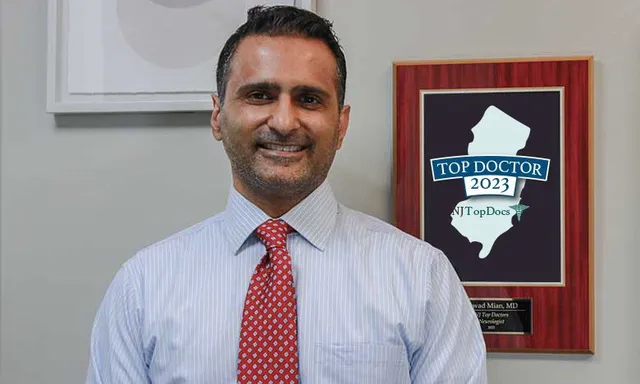
Dr. Fawad Mian was lifting weights when the dumbbell slipped in his hand. He felt something tear in the small joint at the front of his shoulder. He could barely sleep on it. He could barely put on a shirt.
About This Blog
Dr. Fawad Mian was lifting weights when the dumbbell slipped in his hand. He felt something tear in the small joint at the front of his shoulder. He could barely sleep on it. He could barely put on a shirt. He spent a month popping anti-inflammatories before he saw an orthopedic doctor, who told him he might have a tear that warranted surgery. He didn't. What he had was arthritis, two blind steroid injections that did almost nothing, and the start of a chain reaction that would take down his foot, his ankle, and his knee inside of two years.
He was a board-certified neurologist. He had been practicing since 2009. He was not yet 40. In this episode of Fountain of Vitality, host LaMont Leavitt sits down with Dr. Mian to walk through the injuries, the failed standard-of-care treatments, and the path that eventually led him to build Ascend Regenerative.
When Surgery Is the Only Option Offered
The orthopedic doctor who looked at his knee wanted to scope it without ordering imaging first. When Dr. Mian pushed back and got an MRI through a colleague, it turned out an ACL repair done back in 2001 had never actually held. The ligament was still torn. Multiple surgeons later told him the original procedure had not been done correctly.
A different orthopedic doctor, frustrated that his shoulder was not improving, eventually suggested removing the collarbone entirely. The foot doctor's plan for the Achilles was to detach the tendon, shave down the bone underneath, reattach it with anchors, and put him in a boot for weeks of rehab.
He had already had jaw surgery. He had already had knee surgery that had failed. He did not want more.
What Steroids Actually Do to a Joint
Dr. Mian had injected himself with steroids during the autoimmune flare in his wrist. He watched the joint on ultrasound before and after the injection. The fluid and inflammation cleared, which is what steroids are supposed to do. But the joint itself looked like it had been chewed on. He used the same comparison for his shoulder. Steroids are toxic to bone, toxic to cartilage, and they break down tendons.
Most patients who get a cortisone shot never see what the inside of the joint looks like a few weeks later. He did. It changed how he practiced.
How PRP and Stem Cells Actually Work
Prolotherapy, which uses a sugar-based solution to trigger a healing response, was the first treatment that helped him. Then platelet-rich plasma, drawn from his own blood and concentrated, repaired the ligaments in his shoulder and the tendon in his Achilles. He brought it into his practice in 2012.
For more severe cases, he uses autologous stem cell therapy — bone marrow or fat drawn from the patient's own body. He treats the whole area, not just the spot of damage, because injuries rarely live in isolation.
He drew a hard line on what he calls the umbilical stem cell market. Bottles sold across the country, often for thousands of dollars per treatment, have been shown to contain no viable stem cells at all. Just dead tissue and the occasional growth factor. The regulatory environment varies by state, and the wild west pricing reflects that.
Why Healing Requires the Whole System
An injection alone does not fix the patient. Functional movement has to be retrained or the same injury comes back. The healing environment inside the body — diet, sleep, gut health, hormones, mindset, exercise — determines whether the tissue actually rebuilds. He treats musculoskeletal patients the way functional medicine treats chronic disease. The injection is one tool inside a much larger plan.
The Cognitive Health Side of the Practice
Dr. Mian sees patients as young as 18 reporting memory problems. The 40-to-60 demographic comes in constantly. Most of them do not have early Alzheimer's. They have sleep deficits, chronic stress, sedentary lifestyles, blood sugar swings, and untreated metabolic dysfunction. The cortex is measurably thicker in people who exercise. Sleep clears the proteins implicated in Alzheimer's. Cortisol disrupts the hippocampus.
He built Reclaim Your Mind as a structured course to help patients have a better conversation with their doctor about all of it — before any diagnosis is on the table.
What This Conversation Is Actually About
A different model of medicine. One that asks what the body already has, what the system can do on its own, and what gets in the way. One that treats the patient instead of the symptom.
Key Takeaways
Regenerative medicine offers an alternative path when standard orthopedic care defaults to surgery
Steroid injections can damage cartilage, bone, and tendon over time, even when they reduce pain short-term
PRP uses concentrated platelets from the patient's own blood to support tissue repair
Autologous stem cell therapy uses the patient's own bone marrow or fat, not bottled umbilical product
Most umbilical stem cell injections sold commercially contain no viable stem cells
Healing requires functional movement work, not just injections
Cognitive decline is often preventable through sleep, exercise, stress management, and metabolic health
Sleep clears the proteins associated with Alzheimer's, making it foundational for brain health
Cortex thickness is measurably greater in people who exercise consistently
Patients should ask hard questions before any major orthopedic procedure or stem cell treatment
Listen to the full conversation on Fountain of Vitality, available on Apple Podcasts, Spotify, and YouTube. Subscribe to Fountain of Vitality for conversations with leaders redefining health, longevity, and what it means to live with intention. New episodes drop weekly across all major platforms.
Guest Bio
Dr. Fawad Mian is a board-certified neurologist and the founder of Ascend Regenerative, where he treats chronic musculoskeletal conditions using regenerative approaches like PRP and autologous stem cell therapy. He is also the creator of Reclaim Your Mind, a structured program for proactive cognitive health, and the author of Getting to Pain Free. His work sits at the intersection of neurology, regenerative medicine, patient education, and healthcare innovation.
Website
Follow Dr. Fawad Mian: LinkedIn - Dr. Fawad Mian | Ascend Regenerative - prolohealing.com | Advocare Neuro Wellness MD - advocareneurowellnessmd.com | Reclaim Your Mind - learn.prolohealing.com | Cognitive Health Quiz - course.prolohealing.com/quiz
Follow the Fountain of Vitality podcast: Website - FountainofVitality.com | Tiktok - @FountainofVitalitypod | YouTube - @FountainofVitalityshow | Tumblr - @FountainofVitality | Facebook - FountainofVitalityShow | Rumble - Fountain_of_Vitality | Instagram - @FountainofVitalitypodcast | Email - contact@FountainofVitality.com
Follow LaMont Leavitt: LinkedIn - @LaMontJLeavitt | Twitter/X - @ljleavitt1 | InnoviHealth Website - innoviHealth.comRelated Blog
Duis mi velit, auctor vitae leo a, luctus congue dolor. Nullam at velit quis tortor malesuada ultrices vitae vitae lacus. Curabitur tortor purus, tempor in dignissim eget, convallis in lorem.


Subscribe Our Channel On Many Platform






Comments