


Clean Eating and What Actually Works in Nutrition
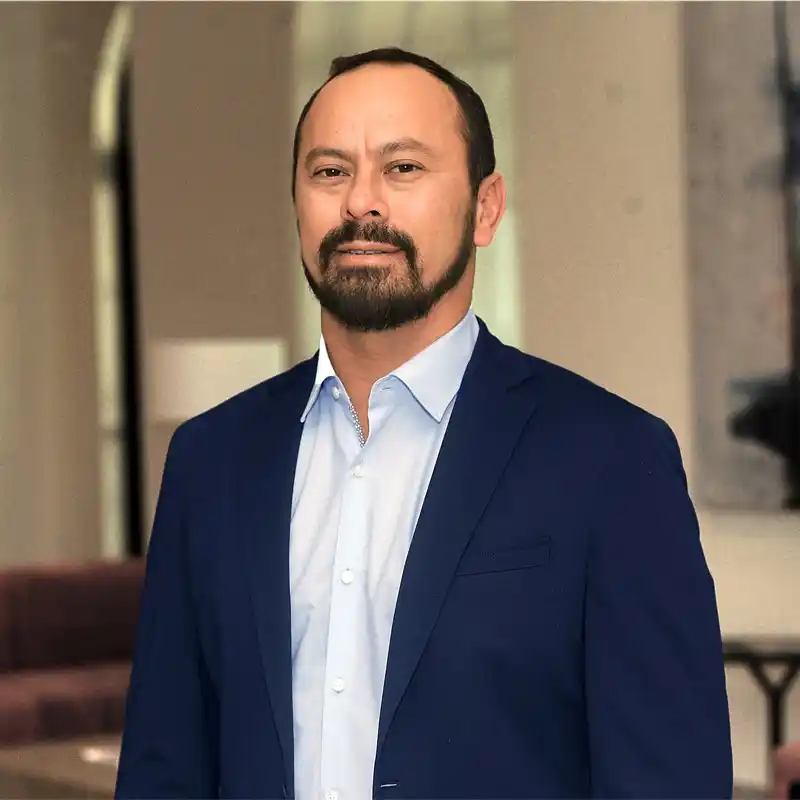
Jon Engelson was raised inside medicine. His father taught at USC Medical School, his relatives were doctors, and Engelson headed to UC San Diego as a pre-med student expecting to follow the same route. The plan held until his mid-20s, when a misdiagnosis by some of the best doctors he could find sent him looking in another direction. He started reading about macrobiotics, then homeopathy, then herbalism and vitamins, treating his own health like an open book.

About This Blog
Jon Engelson was raised inside medicine. His father taught at USC Medical School, his relatives were doctors, and Engelson headed to UC San Diego as a pre-med student expecting to follow the same route. The plan held until his mid-20s, when a misdiagnosis by some of the best doctors he could find sent him looking in another direction. He started reading about macrobiotics, then homeopathy, then herbalism and vitamins, treating his own health like an open book.
A few years later, his four-year-old son began coming home from nursery school covered in rashes, and Engelson kept asking why the snacks at school were full of junk. He was in the investment business at the time, holding a Series 3 license, but the entrepreneur in him could not let the question go. In 1990 he founded You Are What You Eat, built to put healthy snacks into schools, and eight years later the company landed at number 441 on the Inc. 500 list of fastest growing companies.
In this episode of Fountain of Vitality, host LaMont Leavitt sits down with Jon Engelson, Chief Strategy Officer of Joburg Meats, to talk through three decades of lessons about food, health, and the difference between what sells and what actually helps people feel better. Engelson has spent his career as an entrepreneur, consultant, and holistic health advisor, and he brings a student's curiosity to a field full of dogma.
What Works Beats The Dogma
Engelson opens his health seminars with two words: what works. After years of studying competing approaches, he noticed something odd about the people inside each one. The homeopaths did not like the herbalists. The herbalists did not like the homeopaths. Nobody liked the vitamin people, and the vegans and the meat eaters stayed in their own corners. Engelson decided not to pick a camp. He stayed open, watched what helped real people, and kept the parts that delivered results.
That openness led him to the carnivore approach almost by accident. Someone told him about a person who reversed diabetes and high blood pressure and lost weight by eating mostly meat and very little else. Engelson went looking for the catch. He expected a sales pitch at the end of every video and an 800 number on every testimonial. He did not find one. People were simply telling their stories and walking away.
Testimonials Over Double Blind Studies
This is where Engelson parts ways with a lot of conventional research. He argues that anecdotal evidence in nutrition is often stronger than the double-blind studies people treat as the final word. His reasoning is practical. He has put clients on specific diets and watched them struggle to hold the plan for even a week. So when a study claims a large group ate only one way for 60 days, he is skeptical that anyone monitored it closely enough to trust the result.
He also points to belief itself. When someone takes a placebo and improves because they expect to improve, that says something real about the link between mind and body. Engelson treats those stories as data, not noise. If a person was sick, changed one thing, and got better, that sequence means something to him, even if it would never survive a laboratory protocol.
We Are All Built Differently
Engelson is wary of one-size-fits-all numbers. The idea that every adult should sit at 120 over 80, he says, is as strange as deciding everyone should be six foot two and 185 pounds. Bodies vary. A reading of 130 or 140 is not automatically a crisis, and treating it like one can do more harm than the number ever would.
He tells the story of his grandmother, sharp and thriving at 93, who was told she had high blood pressure. His answer was simple. She had high blood pressure because she was alive at 93, and that was worth celebrating rather than medicating into a panic. The point is not to ignore real risk. It is to remember that a person is not a chart.
Big Food Reduces The Quality
Engelson saves his sharpest critique for large food companies. He has watched brands he respected get acquired, then quietly change their ingredient lists. A juice that once came straight off the farm shows up later with natural flavors and concentrate on the label, stripped of the fiber and pulp that made it worth drinking. The math, he says, is brutal and simple. A company can make more money by reducing the quality of the ingredient, so that is often what happens.
He sees the same pattern in cereal aisles and packaged staples, where cheap grains get processed, boxed, stamped with a heart, and sold at a premium. His advice is to read the label and ask why an ingredient is there at all. Why does juice need added flavor? Why does a food need to be enriched if it had nutrition to begin with? The questions are not complicated, and the answers usually point back to margins.
Clean Meat, Four Ingredients
That search for quality is what brought Engelson to Joburg Meats. He met the team in his community, started as a part time consultant, and took a permanent role within six months. The product is air dried jerky that sits in a cooler for up to two weeks, which locks in flavor and nutrients without the heat that cooking and heavy processing add. The ingredient list runs four items deep: meat, salt, apple cider vinegar, and spice. No sugar, no carbs, and five flavors that include original, cracked pepper, peri-peri, chili bites, and black truffle.
The sourcing matters as much as the recipe. The cattle are grass fed and pasture raised, mostly out of Uruguay, and the meat is processed under glatt kosher and halal standards at what Engelson describes as one of the only plants of its kind in the country. The result is a snack that travels well, holds up on a plane or a ski slope, and carries the clean profile Engelson has been chasing since his son came home with those rashes.
Key Takeaways
Start with what works, not with what theory predicts.
Real testimonials can outweigh studies nobody can follow.
No two bodies run on identical numbers.
A single chart reading is not a diagnosis.
Big brands often cut quality to widen their margins.
Read the ingredient list before trusting the label.
Air dried meat keeps nutrients that heat strips out.
Four clean ingredients beat a long panel of additives.
An open mind learns across every health camp.
Listen to the full episode of Fountain of Vitality and rethink what you put on your plate. Subscribe wherever you get your podcasts so you never miss a conversation.
#FountainofVitality #CleanEating #HolisticHealth #Nutrition #GrassFedBeef #WholeFoods #Longevity #FunctionalMedicine #WellnessPodcast #HealthPodcast #WhatWorks #JoburgMeats
Follow Jon Engelson
Website - joburgmeats.com | LinkedIn - Jon Engelson
Follow the Fountain of Vitality podcast
Website - FountainofVitality.com | Tiktok - @FountainofVitalitypod | YouTube - @FountainofVitalityshow | Facebook - FountainofVitalityShow | Rumble - Fountain_of_Vitality | Instagram - @FountainofVitalitypodcast | Email - contact@FountainofVitality.com
Follow LaMont Leavitt
LinkedIn - @LaMontJLeavitt | Twitter/X - @ljleavitt1 | InnoviHealth Website - innoviHealth.com
Related Blog
Duis mi velit, auctor vitae leo a, luctus congue dolor. Nullam at velit quis tortor malesuada ultrices vitae vitae lacus. Curabitur tortor purus, tempor in dignissim eget, convallis in lorem.


Subscribe Our Channel On Many Platform






Comments