


Rewiring Default Behavior: Thayne Martin on Experiential Neuroscience and Culture Change
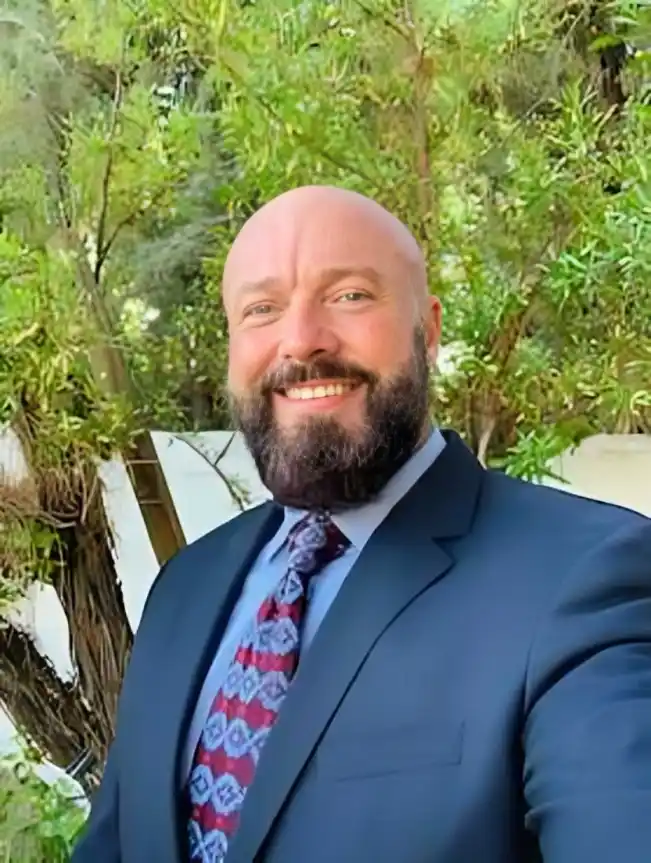
Thayne Martin was on the wrong street. That was how his story started, in a neighborhood his parents thought was safe and wasn't. The damage that found him there as a child did what childhood damage tends to do. It stayed. Like most men of his generation, he had no resources, so he sucked it up, built a new life on top of the scars, and moved on. The scars did not move on with him. By his late forties, he was, in his own words, a very successful, very nice jerk. Kind to family and friends. A wrecking ball to anyone outside that circle. Bitter party of one.
About This Blog
Thayne Martin was on the wrong street. That was how his story started, in a neighborhood his parents thought was safe and wasn't. The damage that found him there as a child did what childhood damage tends to do. It stayed. Like most men of his generation, he had no resources, so he sucked it up, built a new life on top of the scars, and moved on. The scars did not move on with him. By his late forties, he was, in his own words, a very successful, very nice jerk. Kind to family and friends. A wrecking ball to anyone outside that circle. Bitter party of one.
He had spent more than twenty years in professional therapy. None of it had healed him. In this episode of Fountain of Vitality, host LaMont Leavitt sits down with Thayne Martin, CEO and Founder of It's Pure Love, to walk through the near-death experience that reset his life, the bathroom-line encounter that taught him gratitude is neuroscience, and the experiential method he now uses to rewrite default behavior in individuals and companies.
The Day Talk Therapy Stopped Mattering
August 13, 2023. Thayne took medication he should not have been given, had an allergic reaction, seized while swimming, and sank to the bottom of his pool. He gave up the ghost. Then he woke up at the bottom, alive. How he got there and how he got out, he calls grace. What he calls that date is his new birthday. The toxic, angry version of him did not come back up with him.
Twenty plus years of professional therapy had helped him talk about the damage. It had not rewritten it. The talking, he says, was useful but not healing. After the pool, he knew he had to change, and he knew talking would not do it.
The Stranger Named Carla
The shift came at a Carl's Jr. counter. Thayne had driven across town with a full bladder, no open restrooms anywhere, and was minutes from wetting his pants. For him, that was not a small thing. Wetting his pants as a child meant beatings from his abusers. The trigger was sitting right there in his nervous system, waiting. A woman at the register, Carla, called out a bathroom code, "4263," and gave him access to a restroom he had not bought anything to use. The crisis dissolved.
He walked back to the counter, told her his name, asked for hers, and explained what her kindness had just spared him. Then he handed her a $100 bill, asked her to spend it on herself, and let go. When he let go of the bill, something he had never felt before moved through him. Head to his toes, then back up through his chest. He felt his vagus nerve activate between his heart and his brain. Carla was crying. He was crying. He calls it a gratitude cocktail. He spent the rest of that day trying to replicate it and could not. So the entrepreneur in him went looking for the mechanism.
What Gratitude Actually Does to the Brain
Thayne started reading neuroscience. The first study he found showed gratitude quieting the amygdala, the fight-or-flight engine, and activating the prefrontal cortex, the seat of rational thought. He realized he had spent decades with an overactive amygdala running his behavior and an underactive prefrontal cortex sitting in the back seat. Every angry outburst, every Karen moment, every successful-but-mean version of himself traced back to the same wiring.
Talk therapy stops at the mind. The body keeps running the old program. The amygdala fires up an emotion in roughly a quarter of a second, and the subconscious executes a learned response before the conscious self can intervene. That is why people say things in anger they swear they did not say. They didn't. Their pattern recognition did.
The Five Techniques Inside Experiential Neuroscience
It's Pure Love runs on five psychological principles braided together inside every exercise. Polyvagal theory makes each experience safe enough for the nervous system to participate. Memory reconsolidation uses a measurable brainwave state where the brain becomes malleable enough to update old stories. Predictive processing surfaces the subconscious forecast the brain is about to run, usually average to failure, so a better outcome can overwrite it. Interpersonal neuro-biology and integration delivers a pro-social emotional payoff that contradicts the bad forecast. Gratitude neuroscience runs through all of it as the off switch for the amygdala.
A sixth element, resonant encoding, locks the lesson in. Repetition, emotion, volume, and rhythm push the new pattern into the subconscious where it stays. Thayne demonstrates this live with LaMont in the episode using a four-word manifestation phrase, "believe, become, bestow, behold," and LaMont can repeat it on cue after one round.
The 1,200-Signal AI Culture Diagnostic
For companies, Thayne pairs experiential neuroscience with an AI model that reads communication across existing platforms like Slack and Google. It analyzes 1,200 NLP signals to map the real culture, scoring burnout, psychological safety, executive capacity, and three other core metrics in a live dashboard. No 60-day surveys. No coached answers. Just the pattern of how people actually talk to each other.
The fix that follows is not a motivational speaker brought in to make the team feel good for a Monday. Thayne teaches employees how to manage their own emotional energy, so they stop showing up at 50 percent because of unprocessed home or work stress. Distracted employees are roughly a $360 billion problem in the US and close to a trillion worldwide. He treats it as an emotional operating system problem, not a productivity one.
The Six-Year-Old Who Wrote the Wrong Story
Self-limiting beliefs, in Thayne's framing, often trace back to a single childhood moment without an adult present to correct the story. He uses his own example. He was six, his older brother had built a ramp in the front yard, he tried it on a brand-new bike, did an endo over the handlebars, and crashed in front of everyone. They laughed. He wrote the story right there. He could not balance; he was not like his brother, and anything on two wheels was off-limits. He parked the bike on the side of the house and never rode it again. As an adult, he turned down a Harley because of a story a six-year-old wrote in a front yard.
His father, he says, would have changed the story in two minutes. They weren't laughing at you. Lift the handlebars sooner. Try again. That conversation never happened. So Thayne embellished the wrong story for forty years. Most adults are doing some version of the same thing.
The Equation of Life and Abundant Happiness
Thayne teaches a framework built on grade-school math applied to human emotion. Add what brings goodness and joy. Subtract what does not serve. Multiply through aligned action with family, coworkers, and purpose. Divide by returning excess abundance back to the system it came from. The equal sign is gratitude, beginning and end of every equation. It is also the off switch for the amygdala, which is why the system runs on it.
He closes with his grandfather, a salesman named Thayne who sold industrial bandsaw machinery and got called out to a factory by a furious customer whose production line was down. The grandfather brought a spare part, fixed the machine, got the line running, and was told "I love you, Thane" by the same man who had been yelling on the phone an hour earlier. Young Thayne walked out confused. His grandfather told him love belongs in every interaction, family or not. That customer never went anywhere else.
What This Conversation Is Actually About
A different model of behavior change. One that asks what the nervous system is actually doing in the moment, what story the body is running on autopilot, and what experience would write a new one. One that treats the operating system, not the output.
Key Takeaways
Talk therapy works the mind. The body keeps running the old program.
Gratitude is the fastest off switch for the amygdala.
The subconscious fires in 0.25 seconds, before the conscious mind catches up.
Lasting change needs a new experience, not more talking about the old one.
Five principles anchor the method: polyvagal theory, memory reconsolidation, predictive processing, interpersonal neuro-biology, gratitude neuroscience.
Resonant encoding locks patterns in through repetition, emotion, volume, and rhythm.
Culture surveys are too late and too coached. AI reads the real signal.
Distracted employees cost the US economy roughly $360 billion a year.
Most self-limiting beliefs were written by a six-year-old without supervision.
Gratitude in business diffuses conflict and builds loyalty. It costs nothing.
Listen to the full conversation on Fountain of Vitality, available on Apple Podcasts, Spotify, and YouTube. Subscribe to Fountain of Vitality for conversations with leaders redefining health, longevity, and what it means to live with intention. New episodes drop weekly across all major platforms.
Guest Bio
Thayne Martin is the CEO and Founder of It's Pure Love, a company pioneering experiential neuroscience to change default behavior in individuals and organizations. After a 2023 near-death experience, Thayne walked away from a life of bitterness and built a method grounded in gratitude neuroscience, polyvagal theory, memory reconsolidation, predictive processing, and resonant encoding. His work fuses neuroscience training with AI culture diagnostics for executive teams.
Follow Thayne Martin
LinkedIn - Thayne Martin | It's Pure Love - itspurelove.com | Instagram - @thaynemartin
Follow the Fountain of Vitality podcast
Website - FountainofVitality.com | Tiktok - @FountainofVitalitypod | YouTube - @FountainofVitalityshow | Facebook - FountainofVitalityShow | Rumble - Fountain_of_Vitality | Instagram - @FountainofVitalitypodcast | Email - contact@FountainofVitality.com
Follow LaMont Leavitt
LinkedIn - @LaMontJLeavitt | Twitter/X - @ljleavitt1 | InnoviHealth Website - innoviHealth.com
Related Blog
Duis mi velit, auctor vitae leo a, luctus congue dolor. Nullam at velit quis tortor malesuada ultrices vitae vitae lacus. Curabitur tortor purus, tempor in dignissim eget, convallis in lorem.


Subscribe Our Channel On Many Platform






Comments