


The Healthcare Model That Cut Costs in Half by Asking One Simple Question
American healthcare grows more expensive every year, yet trust continues to erode. Employers fund benefits they do not understand. Employees delay care they cannot afford. Outcomes stagnate despite innovation.
About This Blog
American healthcare grows more expensive every year, yet trust continues to erode. Employers fund benefits they do not understand. Employees delay care they cannot afford. Outcomes stagnate despite innovation. Hidden in Anchorage, Alaska, however, one healthcare system quietly proved that better health, higher satisfaction, and lower costs can coexist. The breakthrough did not come from new technology or medical advances. It came from asking a question that healthcare had never prioritized.
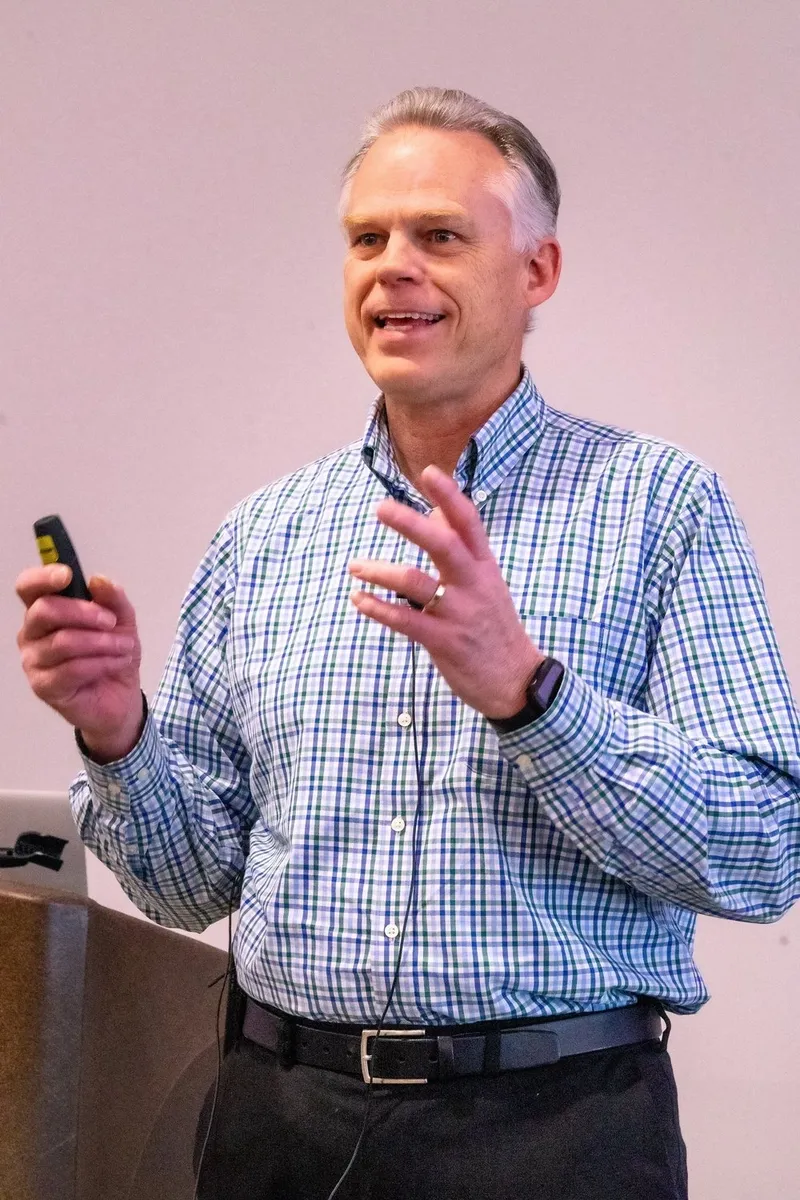
In this episode of Fountain of Vitality, host LaMont Leavitt sits down with Darrell T. Moon, a former hospital administrator whose career took him from the center of the healthcare establishment to the front lines of healthcare reform. Moon once ran ten hospitals as a CFO and administrator. He occupied the top of the healthcare food chain. What unsettled him was not inefficiency, but alignment.
As a hospital administrator, Moon realized his role rewarded him for making decisions that worked against the true customer: business leaders funding employee healthcare. Hospitals, insurers, and vendors prospered, while employers absorbed rising costs without clarity or control. That realization drove Moon to leave hospital administration nearly thirty years ago. Since then, his work has focused on helping business leaders understand that healthcare is not failing by accident. It is failing by design, and fixing it is their responsibility.
Moon’s perspective changed again when he discovered a healthcare system built by Alaska Native tribes that consistently outperformed traditional healthcare at a fraction of the cost. The model, called the Nuka System of Care, delivers 98 percent customer satisfaction, improved population health outcomes, and operates at roughly half the cost of conventional healthcare. While organizations from around the world study it, most American employers have never heard of it.
The Alaska Native Healthcare Revolution
The story begins in the 1980s when the federal government acknowledged a harsh reality. Indigenous tribal lands had been taken, and free healthcare was offered in return. That trade proved devastating. The federal Indian healthcare system became one of the worst-performing healthcare systems in the world. In response, the government issued a notice to tribes across the country. Any tribe that wished to leave the federal system could do so. Funding would follow them if they chose to build something new.
In Alaska, 190 tribes representing approximately 70,000 people faced a sobering truth. Their population health outcomes ranked among the lowest in the world. No population scored worse across standard health metrics. Combined with the worst healthcare system available, the conclusion was unavoidable. They could not make things worse. They had to start over. Rather than reforming the existing system, they chose to build healthcare from the ground up. What they did next would change healthcare history.
They asked their people a simple question: What do you want from healthcare?
What Customers Actually Want
That question exposed how disconnected traditional healthcare had become from the people it served. For decades, healthcare had been built on a paternalistic model. Doctors study the body for years, gain authority, and instruct patients on what to do. Patients comply or are labeled difficult. The Alaska Native communities rejected that model. They did not want healthcare that simply fixed them when something broke. They wanted healthcare that supported their lives.
Their answer reshaped the system. Customers wanted healthcare to become a partner rather than an authority. They wanted providers who understood their goals, families, and aspirations. They wanted someone they could trust long before they ever needed treatment. This approach became the foundation of the aspirational healthcare model. By building trust first, care became coordinated, timely, and effective when health challenges emerged. People turned to providers they already trusted, ensuring faster intervention, better outcomes, and sustained support as they returned to their life goals.
Doctors as Coaches First
To support this model, the Nuka System restructured healthcare teams entirely. Small groups of members were assigned care teams consisting of a physician, nurse, and medical assistant. Then the system delivered a message that stunned most physicians.
Your first job is not to be a doctor.
Instead, physicians were asked to become partners on their customers’ life journeys. They were instructed to build relationships, understand goals, and meet people where they lived. Medical expertise mattered, but relationship came first. This philosophy runs counter to traditional healthcare training. It does not exist in conventional systems. Yet over three decades, this approach created a healthcare system that consistently outperformed every major benchmark. By centering trust and coordination, Nuka eliminated fragmentation and aligned care around people rather than procedures.
Relationship Trumps Science
One of the most controversial principles Moon shares comes from Dr. Doug Eby, medical director of the Nuka System. Dr. Eby rejects one term entirely: non-compliant patient. He argues the term is abusive. Patients cannot be non-compliant. Only healthcare systems can fail to earn trust. If a treatment plan is not implemented, the failure lies in the relationship, not the patient. Without trust, even the most scientifically sound plan has no impact. This reframes accountability in healthcare. When providers blame patients for not taking medications or following instructions, they overlook the fundamental breakdown that prevented trust from forming. Nuka’s success demonstrates that relationship determines whether science ever gets applied.
Four Building Blocks of Aspirational Healthcare
Moon outlines four building blocks that allow employers to implement aspirational healthcare outside Alaska.
Building Block One: Personal Success and Health Coaches
Every individual is supported by a coach who serves as a trusted partner. These coaches do not need to be physicians. Their role is to support goals, build trust, and guide individuals through health decisions consistently over time.
Building Block Two: Concierge Primary Care
Primary care shifts from fee-for-service to subscription-based models. Physicians manage 600 to 800 patients rather than thousands. Incentives align around keeping people healthy rather than generating visits.
Building Block Three: Best-Outcome Providers
Instead of relying on insurance networks, care is directed to providers with the best outcomes. Better care reduces complications, lowers costs, and shortens recovery times.
Building Block Four: Cash Pay Strategies
Healthcare is paid for upfront using employer-funded payment cards. Providers respond favorably to cash payment, often offering better pricing and faster access without network friction.
The CEO Accountability Gap
Through his work with the CEO coaching organization Vistage, Moon has spoken with more than 1,000 CEOs. He asks a simple question: Why do you buy healthcare? Most answer honestly. Because they have to. Moon reframes the issue. Employers buy healthcare to attract and retain talent. Then he asks whether leaders measure whether healthcare actually creates loyalty. Despite universal agreement with Peter Drucker’s principle that what gets measured gets managed, not a single CEO has measured healthcare’s impact on retention. Responsibility cannot be delegated. Brokers, HR teams, and consultants respond to incentives set by leadership. Without alignment, costs rise while outcomes stagnate.
Real-World Results
Moon shares a case involving an 80-employee company facing a 22 percent premium increase. Employees carried high deductibles while the company spent nearly $1 million annually. After implementing aspirational healthcare, results were immediate. Employer spending was capped below the previous year. Potential savings reached $350,000. Employee healthcare costs dropped 40 percent. All care became zero out-of-pocket through cash pay strategies. Eighty-four percent of employees chose direct primary care relationships.
The Future of Healthcare Payment
Moon believes cash pay is the future of healthcare. It benefits providers, patients, and employers. He points to pricing disparities that expose network mythology. An MRI billed at $2,300 through insurance may cost $350 when paid in cash. Network participation does not guarantee savings. Transparent pricing and aligned incentives do.
Taking Action on Aspirational Healthcare
Aspirational healthcare offers employers a proven alternative. By asking customers what they want, building trust first, and aligning incentives, organizations can achieve better outcomes at lower costs.
Healthcare is not broken for institutions. It is broken for those paying for it. Only business leaders with budget authority can fix that alignment. The responsibility is not shared. It is owned.
Learn more about implementing aspirational healthcare for your organization by connecting with Darrell T. Moon. Visit FountainofVitality.com to explore more conversations about transforming health systems, measuring what matters, and creating customer-centric approaches to wellness and longevity.
Follow the Fountain of Vitality podcast: Website: FountainofVitality.com | Tiktok: @FountainofVitalitypod | YouTube: @FountainofVitalityshow | Tumblr: @FountainofVitality | Facebook: FountainofVitalityShow | Rumble: Fountain_of_Vitality
| Instagram: @FountainofVitalitypodcast | Email: contact@FountainofVitality.com
Follow LaMont Leavitt: LinkedIn: @LaMontJLeavitt/ | Twitter/X: @ljleavitt1 |
InnoviHealth Website: innoviHealth.com
Follow Darrell T Moon: Website: DarrellMoon.com | LinkedIn: @DarrellTMoon | Instagram: @DarrellTMoon
Related Blog
Duis mi velit, auctor vitae leo a, luctus congue dolor. Nullam at velit quis tortor malesuada ultrices vitae vitae lacus. Curabitur tortor purus, tempor in dignissim eget, convallis in lorem.


Subscribe Our Channel On Many Platform






Comments