


Diabetic Neuropathy Surgery: How Nerve Decompression Restores Feeling
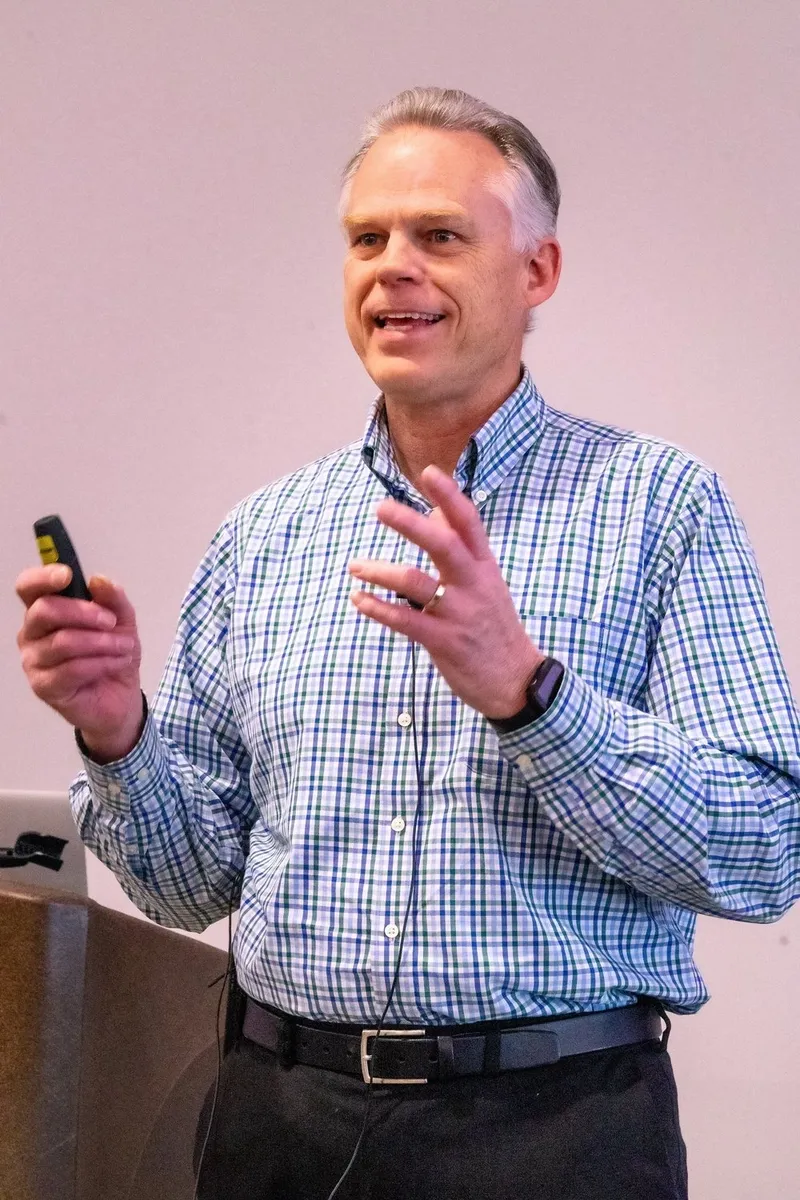
Dr. Stephen L. Barrett did not set out to become one of the country's leading peripheral nerve surgeons. For years, he was a traditional foot and ankle reconstructive surgeon, doing the standard work and enjoying it. Then, around 2000 or 2001, he crossed paths with a plastic and reconstructive surgeon from Johns Hopkins named Lee Dellon, who would become his mentor.

About This Blog
Dr. Stephen L. Barrett did not set out to become one of the country's leading peripheral nerve surgeons. For years, he was a traditional foot and ankle reconstructive surgeon, doing the standard work and enjoying it. Then, around 2000 or 2001, he crossed paths with a plastic and reconstructive surgeon from Johns Hopkins named Lee Dellon, who would become his mentor.
Barrett started attending Dellon's educational workshops and working alongside him in clinic, and within a year or two, his practice had shifted to roughly ninety five percent peripheral nerve work. He had no idea how much peripheral nerve pathology existed until he started looking for it.
In this episode of Fountain of Vitality, host LaMont Leavitt sits down with Dr. Stephen L. Barrett, DPM, Podiatrist & Lower Extremity Peripheral Nerve Surgeon at US Neuropathy Centers, to unpack a claim that sounds almost too simple to be true: much of what gets diagnosed as irreversible diabetic peripheral neuropathy is not nerve destruction at all, it is nerve compression, and compression can be surgically relieved.
A Diagnosis Doctors Call Permanent
Barrett says medical schools still teach that once a patient develops diabetic peripheral neuropathy, nothing can be done. The standard advice is gabapentin or pregabalin and an instruction to live with a painful, sometimes suicidal condition. Falls linked to lost balance and lost sensation in the feet are among the leading causes of death for adults over sixty five.
Barrett does not dispute that neuropathy is serious. What he disputes is the word permanent. His mentor, Dr. Lee Dellon, made a discovery in the mid 1980s that reframed the condition, and Barrett has spent more than twenty years building a surgical practice around it.
How a Hand Clinic Started It
Dellon, a plastic and reconstructive surgeon at Johns Hopkins, regularly received diabetic patients referred for carpal tunnel decompression. After surgery, patients kept reporting something unexpected. Their carpal tunnel pain was gone, and sensation they had written off as permanently lost, numbness in the index and middle fingers, had come back.
The pattern held up case after case. Dellon found two more entrapment points in the hand, decompressed those too, and patients regained full sensation, results that contradicted what he had been taught about diabetic nerve damage.
Why Diabetic Nerves Get Trapped
In the late 1970s, a Danish researcher named Jacobson used a compound called streptozotocin to make lab rats diabetic and study their nerves. He found that diabetic nerves swell, growing about fifty percent larger, and that swelling gets caught inside the body's natural tunnels. Carpal tunnel syndrome, the most common nerve entrapment in the human body, affects roughly two percent of the general population, compared with fourteen to twenty eight percent of people with diabetes.
The nerves inside those tunnels are not destroyed. Diagnostic ultrasound confirms the swelling, and some axonal degeneration does occur, but the nerve itself survives. It is compressed, starved of blood flow, and unable to function properly. Barrett explains that the feet are affected earlier and more severely than the hands, likely because of gravity, pressure, and the biomechanics of standing and walking.
The Numbers Behind the Surgery
When Dellon and later Barrett began decompressing the equivalent nerve tunnels in the feet, more than seventy percent of patients regained sensation. That single result changes the trajectory of a disease. A patient who can feel their feet again is a patient far less likely to develop a foot ulcer in the first place.
For patients who already have a healed ulcer, the standard re-ulceration rate within a year is about forty percent. After peripheral nerve decompression, Barrett puts that number under five percent. An amputation costs roughly seventy five thousand dollars and carries life threatening infection risk, so preventing one ulcer at a time adds up fast, for patients and for the health care system.
What Surgery Day Looks Like
The procedure is outpatient. Decompressing four sites used to take Barrett about an hour, and patients are up and walking again the next day. Many notice a difference before they even leave the recovery area. Dellon has a pre surgery ritual: tickle the bottom of the foot before and after the procedure to check for sensation, a test he nicknamed the test tickle.
Full nerve regeneration takes longer, roughly a millimeter a day, but Barrett has watched intraoperative nerve testing change within minutes: almost no signal before decompression, a strong reading the moment pressure comes off the nerve. Motor strength often improves within hours of surgery, well before the nerve itself has had time to heal.
Finding a Qualified Surgeon
About two hundred surgeons in the United States currently perform this type of decompression, and the procedures are covered by Medicare and private insurance because they are classified as nerve decompressions, the same category as carpal tunnel release. Surgeons train through the Association for Extremity Nerve Surgeons, completing a fundamental course, an advanced workshop, and a week of microsurgery training at the Mayo Clinic in Rochester, Minnesota.
Barrett chairs the association's board of trustees and says awareness, not access, is the real barrier. Patients can search aens.us to find a trained surgeon near them, and those in the Atlanta area can reach Barrett directly through US Neuropathy Centers in Marietta.
Key Takeaways
● Diabetic peripheral neuropathy is often taught as permanent, but a share of cases involve treatable nerve compression, not nerve destruction.
● Diabetic nerves swell by roughly fifty percent, which is what traps them inside the body's natural tunnels.
● Carpal tunnel syndrome affects about two percent of the general population and up to twenty eight percent of people with diabetes.
● Restoring sensation is protective. Patients who can feel their feet again are far less likely to develop an ulcer.
● Nerve decompression can cut a forty percent re-ulceration rate down to under five percent.
● An amputation costs an estimated seventy five thousand dollars, making prevention a financial priority as well as a medical one.
● The surgery is outpatient, and most patients are walking again the next day.
● Motor strength often improves within hours, even though full nerve regeneration takes months.
● About two hundred surgeons in the United States currently perform this procedure, and it is covered by Medicare and private insurance.
● Metabolic changes, including exercise and a lower carbohydrate diet, can further reduce type two diabetes itself.
Listen to the full episode of Fountain of Vitality and rethink what you know about diabetic nerve damage. Subscribe wherever you get your podcasts so each new conversation reaches you.
#FountainofVitality #DiabeticNeuropathy #NerveSurgery #DiabetesAwareness #FootHealth #Podiatry #HealthPodcast #DiabetesCare #Longevity #ChronicPain
GUEST BIO
Dr. Stephen L. Barrett, DPM, is a Podiatrist & Lower Extremity Peripheral Nerve Surgeon at US Neuropathy Centers in Marietta, Georgia. He holds degrees from the University of Utah, Scholl College of Podiatric Medicine, and Texas Tech University. Barrett sits on the board of trustees of the Association for Extremity Nerve Surgeons and trained thousands of surgeons worldwide in techniques he developed for diabetic peripheral neuropathy.
Follow Dr. Stephen L. Barrett
LinkedIn - @stephen-barrett-92776a51 | Website - usneuropathycenters.com
Follow the Fountain of Vitality podcast
Website - FountainofVitality.com | Tiktok - @FountainofVitalitypod | YouTube - @FountainofVitalityshow | Facebook - FountainofVitalityShow | Rumble - Fountain_of_Vitality | Instagram - @FountainofVitalitypodcast | Email - contact@FountainofVitality.com
Follow LaMont Leavitt
LinkedIn - @LaMontJLeavitt | Twitter/X - @ljleavitt1 | InnoviHealth Website - innoviHealth.comRelated Blog
Duis mi velit, auctor vitae leo a, luctus congue dolor. Nullam at velit quis tortor malesuada ultrices vitae vitae lacus. Curabitur tortor purus, tempor in dignissim eget, convallis in lorem.

Subscribe Our Channel On Many Platform


Comments